Hunting the Northeast Pre-Rut
How the Northeast pre-rut actually unfolds, and where to sit while it does
Ryan Polce
Most years the Northeast pre-rut runs from about October 20 into the first week of November. It comes earlier up north, in Maine, northern New Hampshire and Vermont, and the Adirondacks, and later down in southern New England and Pennsylvania. Those two or three weeks are when mature bucks are back on their feet in daylight but still living on their own ground. Hunt the acorns, hunt close to the does, sit longer than feels reasonable, and take your days off when a real cold front shows up.
- Peak breeding in the Northeast usually lands somewhere between November 5 and November 20. The pre-rut is the two or three weeks right in front of it.
- Your dates move with your latitude. Northern zones breed earlier than southern ones, and elevation pulls them earlier still.
- The seeking phase, roughly October 20 to November 3, is the best window of the year for one specific buck. He's on his feet in daylight, working rub lines and checking does, but he hasn't paired off yet. Once chasing starts you'll see more bucks, though they're running and hard to stop.
- Find the acorns, find where the does bed, then hunt the ground between them. That's where the rub lines and the scrapes will be.
- Sit all day. In late October a lot of good Northeast bucks get shot between ten in the morning and two in the afternoon.
- A genuine cold front after October 20 beats any date on the calendar.
When the Pre-Rut Happens
The pre-rut is the run-up to breeding, which in the Northeast means somewhere around October 20 to November 8. What starts it isn't weather, it's daylight. Once the days get short enough after the summer solstice, a buck's pineal gland puts out more melatonin, and that flips the switch on everything else. Testosterone climbs, his neck thickens, the bachelor group he's been running with since spring falls apart, and food stops being the first thing on his mind.
| Window | What bucks are doing | How to hunt it |
|---|---|---|
| Oct 15 – 25 | Bachelor groups splitting up. First hard rubs. Scrapes just starting to open. | Evenings on food, especially the first big drop under white oaks. Scout more than you sit. |
| Oct 25 – Nov 3 | Seeking. Bucks up on their feet in daylight, following rub lines toward the does. | Your best week of the year. Sit all day. Mornings near the edge of doe bedding, evenings between the bedding and the feed. |
| Nov 3 – 10 | Chasing. The first does cycle and the bucks run them. | Rattle and call if you want to, then stay put. Movement can come at any hour. |
| Nov 10 – 20 | Peak breeding and lockdown, earlier in the north. Bucks holed up with a hot doe. | Hard hunting. Get tight to the does and be patient. Don't expect a cruiser. |
If I only get a handful of days off in late October, I spend them on the back side of a cold front. A fifteen- to twenty-degree drop with high pressure building in behind it will put a mature buck on his feet in daylight, usually inside a day of the front going through. A warm south wind in the same week won't do it.
The Four Stages You Can Actually See
The pre-rut isn't one thing that happens on one date. It's a ramp with four stages you can recognize from the sign in front of you, and knowing which one you're in tells you where to sit, when to sit, and how loud to get.
- 1.Bachelor group breakup, usually early to mid October. The summer gang of bucks splits up. They're still on fall feeding patterns, but the sparring starts and the first rubs show up on soft-barked trees.
- 2.Seeking, roughly October 20 to November 3. This is the two weeks I'd pick if I only got two. Bucks are covering ground, working rub lines and scrape lines, and checking doe groups. They aren't chasing yet.
- 3.Chasing, early November. The first does come into heat and get run. Movement is fast and unpredictable, and it can happen any hour of the day.
- 4.Peak breeding and lockdown. Northern zones run about November 5 to 15, southern zones about November 10 to 20. A buck that's got a hot doe is bedded with her, and he isn't coming to your grunt call.
Bucks don't vanish in the middle of October. They move. The summer feeding routine falls apart once the acorns start dropping and the pressure picks up, and their daylight movement narrows down to the first and last hour of light plus the middle of the day. What most hunters are looking at during the lull is a buck in transition and a deer herd that already knows where the trucks park. It ends when the seeking phase starts, which up here is the last week of October.
Reading Sign in Late October
The pre-rut writes everything down on trees. Learning to read it is the most valuable scouting skill you can build in the Northeast, because it tells you not just that a buck is using an area but where he's going and roughly how big he is.
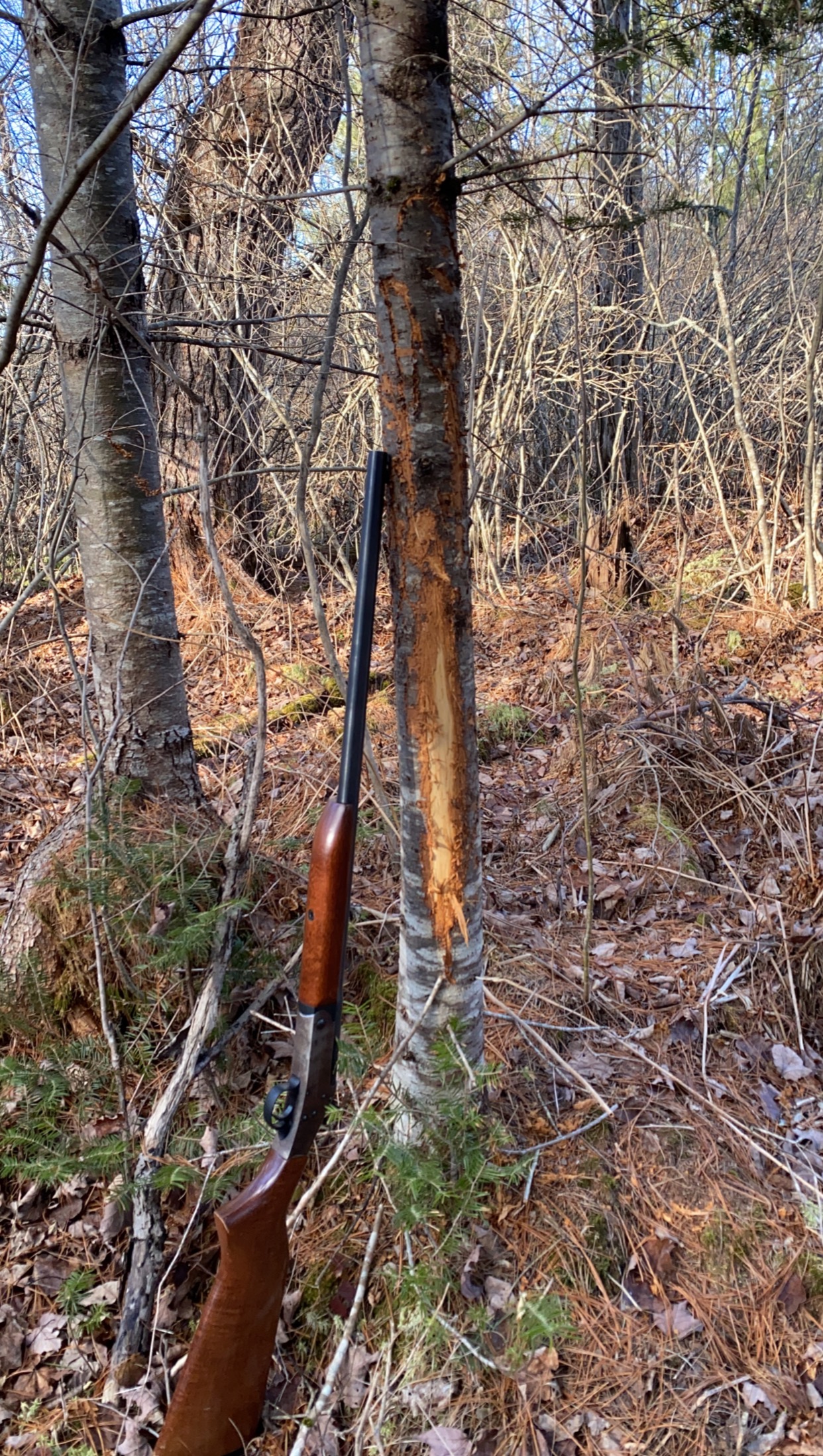
- ›Early rubs show up on aromatic, soft-barked trees: cedar, hemlock, white pine, sumac, apple, cherry. Bucks hit these first in late September and early October because they hold scent.
- ›The harder rubs on maple, beech and birch come later. Bigger diameter, deeper gouges, higher off the ground. That's a bigger buck, and the change in tree species tells you he's heating up.
- ›Rub lines. A run of rubs along one route is about as close to a map of a buck's loop as you're going to get. Look for them on field edges, ridge tops, and old logging roads.
- ›Scrapes show up mid to late October. The ones worth your time are community scrapes near doe concentrations, with a licking branch a few feet overhead and dark, wet dirt with fresh tracks in it.
- ›Judge freshness by moisture and color instead of by hope. If it rained three days ago and the scrape is dry, it's old.
Where Pre-Rut Bucks Actually Move
In the Northeast, mast decides where the deer are. A heavy white oak crop, or a good beech year in the northern hardwoods, will pull every deer in the township off your food plot and into the timber. Before you pick a stand, find out whether your oaks produced and which crowns are dropping.
- ›Mast: white oak acorns first, red oak as the reliable standby, plus beech and wild apple. In a heavy mast year the oak flats are the feeding areas and your plot is a wasted sit.
- ›Thermal cover: hemlock, white pine, spruce-fir, cedar swamps. Bucks bed in it when the wind blows and the temperature drops, and they don't wander far from it.
- ›Early successional growth: two- to eight-year-old cutovers, and old pasture going back to hawthorn and sumac. It's the thickest cover on the landscape, and it's where the does bed.
- ›Wet ground: beaver flowages, alder swamps, stream bottoms. Bucks use them as travel corridors, and they're usually the last place anyone looks.
- ›Edge and structure: old stone walls, overgrown farm lanes, abandoned orchards, ridge saddles. These funnel movement instead of spreading it out.
Deer density changes your approach more than anything else. The big woods of northern Maine, the Adirondacks, and the Northeast Kingdom might hold five to fifteen deer a square mile. The Champlain Valley, the Finger Lakes, the Connecticut River Valley, and a lot of southeastern Pennsylvania run three or four times that. In farmland you're hunting a pattern, and you can count on it. In big woods you're hunting one deer on ground you know he actually uses: a bench, a saddle, a beaver dam crossing, a scrape line down an old logging road.
How to Set Up on a Pre-Rut Buck
Wind first, then thermals
Scent is the whole game, and in hill country the wind is only part of it. Cold air drains downhill at first light and warm air rises off the bottoms in the evening. A stand that's perfect on a northwest wind at dawn can burn you on that same wind at dusk. Think about your walk in, the stand itself, and your way out around both the wind and the way the ground moves air.
Come in the back door
Northeast public land gets pounded. Walk the long way in, use the old logging road or the stream bottom or the ridge nobody wants to climb. Those extra forty minutes are worth more than anything you can buy.
Sit all day while they're seeking
Nine in the morning to two in the afternoon is when a lot of good Northeast bucks die. During the seeking phase they're moving around the clock, and the middle of the day is when they feel safest doing it, especially on public ground where everyone else has gone back to camp. Pack a lunch and stay in the tree.
Call, but match the stage
The pre-rut is the most forgiving time of the year to call. Bucks are looking for a fight and for company, and they aren't tied to a doe yet. Light contact grunts and tending grunts will do most of the work. Rattling is best during seeking and chasing, and it's much better where the buck-to-doe ratio is sane than in low-density big woods. Keep your sequences to twenty or thirty seconds, follow up with a grunt, then leave the antlers alone for at least twenty minutes.
Decoys and mock scrapes
A buck decoy set broadside or quartering away, facing downwind, can pull a buck in from a long way on a big-woods ridge. Put it over a mock scrape under a real licking branch and you've given him a reason to stop and check instead of walking through. Use synthetic urine. A lot of the Northeast either restricts or bans the natural stuff over disease concerns.
Mistakes That Cost First-Timers Deer
I've made every one of these. All of them are fixable before opening day.
- ›Over-hunting one stand. One or two sits a week on the right wind beats five sits on the wrong one.
- ›Leaving at ten in the morning. The last hour of the morning is when the buck you're after stands up.
- ›Hunting a bad wind and blowing the bedding area out. You won't see the deer that leaves.
- ›Hunting the first two hundred yards off the road. That's where everybody else is. Go deeper, or go where the trailhead signs don't point.
- ›Not checking the oaks. In a heavy mast year your food plot doesn't matter until the acorns are gone.
- ›Skipping shot prep. Know your real maximum ethical range, and practice it sitting, kneeling, and twisted around a tree, not off a bench.
- ›Hunting what looks good to you instead of where the deer want to be. If a spot looks like a hell hole, it's probably good deer habitat.
What Good Pre-Rut Hunters Do Differently
- ›They build the buck's loop. A rub line, a primary scrape, and a doe bedding area inside a few hundred yards of each other usually describe one buck's circuit. Hunt the convergence once on the right wind, then leave it alone for five to seven days.
- ›They hunt the micro-funnel instead of the pretty stand. A gap in a stone wall, a saddle, a bench above a creek, a beaver dam crossing. Mature bucks use structure because it keeps them out of sight, and that makes them predictable.
- ›They hunt the pressure calendar. On hard-hunted Northeast ground, midweek, mid-day, and the days right after the firearms opener are quietly excellent. The woods are empty and the deer settle back into daytime movement.
- ›They pair the barometer with the calendar. A rising barometer behind a front that lands inside the seeking phase is the best combination the Northeast offers. Build your season around it.
Rules You Need to Check Every Year
The Northeast isn't the Midwest, and the regulations show it. Disease management, not tradition, drives most of what you'll read in your state digest.
- ›Baiting and feeding. Rules vary and they change. New York, Vermont and New Hampshire prohibit baiting for deer; other states allow it with restrictions. Check the current digest instead of taking someone's word for it.
- ›Natural deer urine. Several Northeast states, New York included, restrict or ban natural urine lures because of chronic wasting disease. Synthetics are legal and they work.
- ›Carcass transport. Plenty of states limit moving whole carcasses across county or state lines to slow disease spread. Know the rule before you drive home.
- ›Blaze orange and legal hours. The firearms opener in northern New England lands right in the middle of the rut, New York's Southern Zone opens the third Saturday of November, and Pennsylvania's traditional opener falls after Thanksgiving, well past peak breeding. If you're bowhunting while the guns are out, know the orange requirements.
- ›Your own season dates. The structure of your firearms season decides how much of the pre-rut you actually get with a bow. Take your vacation days around the deer, not around the office calendar.
None of this is complicated, it just has to be done before the week you want to hunt. Find the acorns, find the does, find the rub lines that connect them, and then be in the one place where all three come together when a cold front rolls through in the last week of October. That's the whole game up here.
Frequently Asked Questions
What is the pre-rut in deer hunting?
It's the two or three weeks before breeding peaks, when testosterone is climbing and bucks are suddenly on their feet in daylight. They're working rub lines and scrapes and checking doe groups, but they haven't paired off with a hot doe yet, which makes them a lot easier to kill than they'll be a week later.
When is the pre-rut in the Northeast?
Roughly October 20 through November 8. Peak breeding runs about November 5 to 15 in northern New England and the Adirondacks, and November 10 to 20 in southern New England, New York, New Jersey and Pennsylvania. The pre-rut is the two or three weeks just ahead of whichever date applies to you.
Is the October lull real?
Partly. The deer don't go anywhere, but in mid-October bucks move off their summer feeding patterns onto mast, and hunting pressure pushes their daylight movement into dawn, dusk and the middle of the day. It usually ends in the last week of October when the seeking phase starts.
What is the best time of day to hunt the pre-rut?
Dawn through late morning, especially on the edge of doe bedding. Midday is underrated and almost nobody hunts it during the seeking phase, so pack a lunch and stay in the tree from nine to two.
How often should you hunt the same stand in the pre-rut?
Once or twice a week, and only on the right wind. Repeating sits educate deer in a hurry. If you see, smell or spook a mature buck, leave that stand alone for five to seven days.
Does rattling work during the pre-rut?
Yes. It's the best rattling window of the year, because bucks are competitive but not tied down to a doe yet. It works best where the buck-to-doe ratio is reasonable, and it loses its edge in low-density big woods. Use sequences of twenty to thirty seconds and wait at least twenty minutes between them.
Should you hunt food or cover during the pre-rut?
Both, at different times of day. Bedding cover in the morning, food in the evening, and let the terrain in between decide which stand you sit. In a heavy mast year, oak flats and beech stands take the place of a food plot as the evening draw.
Does the pre-rut come earlier in northern New England?
Yes. Latitude and elevation drive it. Breeding peaks earlier in Maine, northern New Hampshire and Vermont and the Adirondacks than it does in Connecticut, Rhode Island, southern New York, New Jersey and Pennsylvania, so your best dates move earlier as you move north.
Map your own pre-rut plan
Draw your property, and Game Tracts reads the terrain, mast and cover to build stand locations, wind plans and entry and exit routes for your ground.
Analyze my land